
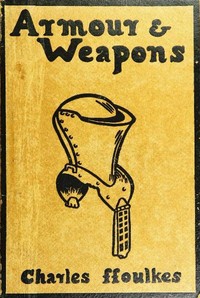
Armour & Weapons by Charles John Ffoulkes
First published in 1909, Charles Ffoulkes's Armour & Weapons isn't a novel with a plot, but it tells a fascinating story. It's the story of European fighting gear from the fall of Rome up to the 1600s. Ffoulkes, who was the Curator of the Royal Armouries, acts as your guide. He starts with the early Middle Ages, showing how armor began as a practical necessity—mostly chainmail—and then traces its incredible evolution.
The Story
The 'story' here is one of constant change driven by a simple need: don't get killed. The book shows how the invention of the crossbow and the longbow forced armorers to create thicker, more protective plate armor. You see the knight's suit transform from a mix of mail and plates into the iconic, fully enclosed suit of the 1400s. But then, the story takes a turn. The rise of gunpowder weapons changed everything. Ffoulkes explains how armor became so thick and heavy to stop bullets that it was impractical, and how it gradually faded from the battlefield, becoming ceremonial or used only for sport in jousting. It's a complete life cycle of a technology, from birth to obsolescence.
Why You Should Read It
What makes this book special is Ffoulkes's voice. He writes with the authority of a museum curator but the enthusiasm of a collector. You can tell he's handled these pieces, puzzled over their construction, and wondered about the men who wore them. He doesn't just describe a helmet; he explains why its visor was shaped a certain way for sight and breathing. He connects the changes in a sword's design to changes in fighting style. It turns a museum display into something alive. You're not just looking at a static object; you're understanding a tool that was part of a life-and-death struggle.
Final Verdict
This is a perfect read for history lovers, especially those who enjoy military history or the 'how' and 'why' behind historical objects. It's also great for writers, game designers, or anyone building a fantasy world who wants real-world inspiration. Be warned: it's an older book, so some of the historical framing might feel dated, but the core information on the armor itself is rock-solid. Think of it less as a textbook and more as a long, fascinating lecture from a passionate expert. If you've ever stared at a suit of armor and wanted to know its story, Ffoulkes is ready to tell you.
This book is widely considered to be in the public domain. It is now common property for all to enjoy.
Kimberly Hill
1 year agoPerfect.
Melissa White
1 year agoHaving read this twice, the atmosphere created is totally immersive. Exceeded all my expectations.







Paul Lewis
1 year agoWithout a doubt, the plot twists are genuinely surprising. I would gladly recommend this title.