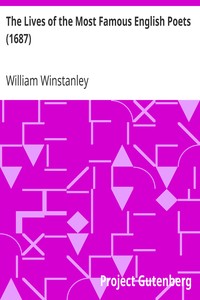
The Lives of the Most Famous English Poets (1687) by William Winstanley
This isn't a novel with a plot in the traditional sense. Think of it as a very old, very opinionated reference book. William Winstanley, a writer and compiler in the late 1600s, decided to gather short biographies of English poets, starting with the legendary figures like Chaucer and working his way up to his own contemporaries. He calls them 'lives,' but they're really quick sketches—a mix of basic facts, famous works, personal anecdotes, and a heavy dose of Winstanley's own judgments.
The Story
There's no single narrative. Instead, you jump from poet to poet. One page you're reading about Geoffrey Chaucer's life and major works, presented with great respect. The next, you might get a brief, less-flattering note on a lesser-known poet whose work Winstanley didn't care for. He includes everyone from the giants like Edmund Spenser and John Milton to figures who are largely forgotten today. The 'story' is the unfolding patchwork of English literary history as one man in 1687 understood it, complete with all the gaps, biases, and folklore of the time.
Why You Should Read It
You don't read this for accurate, scholarly history. You read it for the personality. Winstanley's voice comes through on every page. His likes and dislikes are blatant. It's a snapshot of how regular, educated people thought about their literary past before modern academic standards existed. You get the sense of a canon being formed in real time, but by a guy who might have heard some of these stories in a tavern. It's humbling and hilarious to see which poets were celebrated then versus now. The value is in the raw, unfiltered perspective.
Final Verdict
This is a niche pick, but a fascinating one. It's perfect for history buffs and literature lovers who enjoy seeing the messy beginnings of something we now take for granted, like literary criticism or biography. If you love the idea of primary sources—the original, often flawed documents from history—this is a goldmine. It's not a page-turner for everyone, but if you've ever wondered what people in the 1600s actually thought about the poets of the 1500s, here's your chance to find out, straight from a chatty, biased, and utterly compelling source.
This is a copyright-free edition. Thank you for supporting open literature.
Donna Jones
1 year agoFive stars!
Amanda Anderson
1 year agoThis is one of those stories where the atmosphere created is totally immersive. Truly inspiring.