
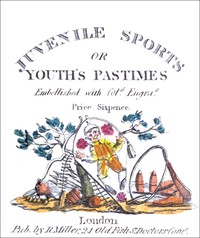
Juvenile Sports; or, Youth's Pastimes by Anonymous
Picking up 'Juvenile Sports' feels like finding a forgotten instruction manual. There's no traditional story with characters and a climax. Instead, the book acts as a quiet observer and recorder. It systematically walks through the popular games and physical activities for boys and girls in its time period (likely the 19th century). Each section is dedicated to a different pastime, laying out the rules, the necessary equipment (often just a stick, a stone, or a piece of chalk), and how to win.
The Story
Think of it less as a narrative and more as an artifact. The 'plot' is the rhythm of a childhood year, moving from outdoor summer games to the indoor amusements of winter. One page explains the precise chalk layout for a game of Hop-Scotch. Another details the complex strategies and terminology of playing Marbles ('knuckling down,' 'taws,' and 'ringers'). There are team games, solitary contests, and activities that clearly required a lot of space and energy. The anonymous author presents it all with a straightforward, almost earnest tone, treating these children's games with genuine respect and attention.
Why You Should Read It
This book captivated me because of the window it opens. Reading it, you're not just learning rules; you're glimpsing a world where play was community-based, physical, and deeply imaginative with very few resources. It highlights a stark contrast to today's often digital, isolated play. There's a sweet, poignant quality to it. Some descriptions made me smile with recognition (a version of tag is in here!), while others felt like reading about a lost civilization. The anonymity of the author makes it feel even more like a collective memory, a message from the past saying, 'This is how we spent our hours.' It’s a quiet reflection on simplicity and the universal need for fun.
Final Verdict
This isn't a book for someone looking for a gripping plot. It’s perfect for history buffs, educators, parents, or anyone with a sense of nostalgia. If you enjoy social history, anthropology, or just thinking about how everyday life has changed, you'll find it really interesting. It's also a great, gentle read for when you want something completely different from modern fiction. Keep an open mind, and you might just discover the rules to a game you can try in your own backyard.
This digital edition is based on a public domain text. Feel free to use it for personal or commercial purposes.
Karen Wright
3 months agoSolid story.
Jennifer Jackson
4 months agoCompatible with my e-reader, thanks.




Sandra Lee
1 year agoVery helpful, thanks.