
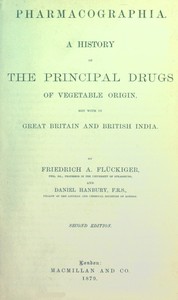
Pharmacographia by Friedrich A. Flückiger and Daniel Hanbury
Forget the dusty title for a second. Pharmacographia is a massive project to make sense of the world's medicines at a time when global trade was exploding but reliable information was scarce. Think of it as the original, crowd-sourced Wikipedia of drugs, written long before the internet.
The Story
The book doesn't have a plot with characters in the usual sense. The 'story' is the pursuit of clarity itself. Daniel Hanbury, a passionate amateur scientist, and Friedrich Flückiger, a professional pharmacist, set out to document every plant used in medicine across the globe. They didn't just sit in a library. They corresponded with missionaries in China, doctors in India, and traders in South America. They compared samples, analyzed chemical properties, and dug through ancient texts in multiple languages. Each entry in the book is the result of this detective work—correcting false identities, clarifying which part of the plant to use, and recording its real effects. The narrative is the slow, painstaking victory of organized science over centuries of confusion and guesswork.
Why You Should Read It
What grabbed me was the sheer human effort behind it. This book was built on letters, trust, and shared curiosity across continents. Reading sections of it, you feel the excitement of discovery—like when they finally pinpoint the true source of a valuable gum or debunk a dangerous myth. It connects dots between cultures, showing how a remedy from Native American knowledge could become a standard treatment in European hospitals. It makes you appreciate that every modern, mass-produced medicine has a wild, often unpredictable origin story. It’s a humbling reminder of how much we didn't know, and how hard people worked to figure it out.
Final Verdict
This is a specialty book, but don't let that scare you off. It's perfect for history buffs who love stories of exploration and scientific discovery, or for anyone in healthcare who wants to understand the deep roots of their field. Gardeners and plant enthusiasts will geek out over the detailed botanical histories. It's not a cover-to-cover read for most; it's a book to dip into. Open to a page about quinine, opium, or peppermint, and you'll fall down a rabbit hole of commerce, empire, and healing. Think of it as an astonishingly detailed, pre-digital database that helped build the foundation of modern medicine. It’s a quiet monument to getting things right.
The copyright for this book has expired, making it public property. It is available for public use and education.





Joseph Scott
2 years agoBeautifully written.