
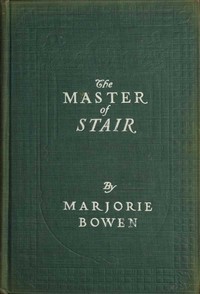
The Master of Stair by Marjorie Bowen
Marjorie Bowen's The Master of Stair is a historical novel that pulls no punches. Published in 1907, it takes a grim episode from 1692—the Massacre of Glencoe—and builds a tense, character-driven story around it.
The Story
The book follows Sir John Dalrymple, the Master of Stair, a powerful Scottish politician serving the new Protestant king, William of Orange. The Highlands are in turmoil, with clans like the MacDonalds of Glencoe slow to swear allegiance to the new monarch. Dalrymple sees this not just as rebellion, but as a chance to crush an old enemy for good. From the comfort of Edinburgh and London, he meticulously crafts a ruthless plan: issue a secret order for the complete destruction of the clan. The order falls into the hands of Captain Robert Campbell, a soldier with a personal grudge, who arrives at Glencoe under the pretense of friendship. For twelve days, the MacDonalds host Campbell's troops. Then, in the dead of a winter night, the guests turn on their hosts. The novel moves between the political machinations of Dalrymple and the tragic, intimate horror unfolding in the glen.
Why You Should Read It
What makes this book so compelling is Bowen's refusal to paint in simple black and white. Dalrymple isn't a cartoon villain; he's a frighteningly logical man who believes his brutality is for the greater good of a united Britain. You get inside his head and see how easy it is to justify atrocity with paperwork and political rhetoric. The chapters in Glencoe, by contrast, are full of chilling dramatic irony. You see the MacDonalds, with all their flaws and warmth, living on borrowed time. Bowen's prose is sharp and atmospheric, pulling you into the foggy Highlands and the smoky corridors of power. She shows how a massacre isn't just a moment of violence, but the endpoint of calculated decisions made far from the bloodshed.
Final Verdict
The Master of Stair is perfect for readers who love history that feels raw and untamed, not polished and heroic. It's for anyone who enjoys complex, morally ambiguous characters and stories that explore the dark side of political 'progress.' If you liked the gritty realism of Hilary Mantel's Wolf Hall but want a story with a faster, more tragic pulse, this is your next read. Fair warning: it's not a cheerful tale, but it's a powerful and unforgettable one that sticks with you long after the last page.
This is a copyright-free edition. You do not need permission to reproduce this work.
Joseph Lewis
7 months agoAs someone who reads a lot, the storytelling feels authentic and emotionally grounded. I would gladly recommend this title.
Mason Johnson
4 months agoHelped me clear up some confusion on the topic.



Andrew Thomas
2 months agoTo be perfectly clear, the arguments are well-supported by credible references. I will read more from this author.